The Closed Loop: How Instant Answers Killed the Art of Not Knowing

There is a particular quality of mind that the Enlightenment philosophers prized above almost all others, and it had nothing to do with the possession of correct answers. It was, rather, the capacity to hold a question open — to carry it through days and weeks, to let it disturb sleep and interrupt meals, to feel its edges sharpen with time rather than dissolve at the first available resolution. Denis Diderot, compiling his great Encyclopédie, was not chiefly interested in cataloguing what humanity already knew. He was interested in mapping the boundaries of ignorance, in showing readers precisely where knowledge ended and the genuinely unknown began. That boundary, he understood, was not a problem to be eliminated. It was an invitation.
We have now built a civilization expressly designed to eliminate it.
The Architecture of Immediate Resolution
The modern search engine is, by design, an anxiety-reduction machine. Type a question — any question — and within fractions of a second, the interface returns something that looks, feels, and functions like an answer. The psychological contract is efficient and seductive: you arrive with uncertainty, you leave without it. Google's entire commercial architecture depends on this exchange feeling complete, satisfying, and above all, finished. Advertising revenue flows from clicks, and clicks flow from users who believe their curiosity has been honored and discharged.
But curiosity, genuine intellectual curiosity, is not discharged by an answer. It is deepened by one.
This distinction matters enormously, and we have largely stopped making it. When a ten-year-old asks why the sky is blue and a parent hands over a phone, what happens next is not inquiry — it is retrieval. The child receives a fact. The fact closes the question. What never opens is the more interesting conversation that might have followed: Why does light behave that way? What is a wavelength? Why do our eyes perceive some wavelengths and not others? What would the sky look like to a bee? The retrieved answer does not lead anywhere. It terminates. And termination, repeated thousands of times across a childhood, trains a mind to expect resolution rather than depth.
Wonder as a Sustained Condition
Philosophers from Aristotle onward have identified wonder — thaumazein — as the origin of philosophy itself. Not wonder as a momentary gasp of surprise, but wonder as an enduring orientation toward the world, a willingness to find ordinary phenomena strange and to follow that strangeness wherever it leads. The American philosopher William James described genuine curiosity as a kind of productive discomfort: the mind that wonders is the mind that cannot rest with surfaces, that keeps pressing against the apparent until the underlying reveals itself.
What the instant-answer economy has done is sever this connection between discomfort and depth. We have industrialized the relief of not-knowing without preserving any of the value that not-knowing generates. A person who has never been required to sit with a question — to feel its weight, to approach it from multiple angles, to consult conflicting sources and weigh them against each other — has not learned to think. They have learned to search. These are categorically different skills, and we have spent two decades pretending otherwise.
The consequences are visible across American intellectual life. In universities, professors increasingly report students who are extraordinarily efficient at locating information and extraordinarily poor at evaluating it, contextualizing it, or recognizing when an answer raises more questions than it resolves. In public discourse, the expectation that every complex issue admits of a simple, retrievable resolution has made nuance feel like evasion and ambiguity feel like incompetence. We have, in other words, applied the logic of the search bar to domains where that logic is actively destructive.
The Transactional Mind
There is a term in economics — satisficing — coined by the social scientist Herbert Simon to describe decision-making that seeks a solution that is merely adequate rather than optimal. The concept was descriptive, not pejorative. But it captures something troubling about the intellectual habits the current information environment cultivates. When answers are cheap, abundant, and instantaneous, the rational response is to stop at the first acceptable one. The cost of going deeper exceeds the perceived benefit. Inquiry becomes, in the economist's vocabulary, irrational.
What this framing misses, of course, is that inquiry was never supposed to be rational in that narrow sense. It was supposed to be transformative. The student who spends three weeks genuinely wrestling with a philosophical problem does not merely acquire an answer at the end of those three weeks. They acquire a different relationship to difficulty, a higher tolerance for uncertainty, and a more supple capacity for thought. The question has done something to them that no retrieved answer could. It has, in the oldest sense of the word, educated them — drawn something out that was not visible before.
Transactional inquiry, by contrast, leaves the inquirer unchanged. You arrive with a gap in your information; you leave with it filled. Nothing about you is different. The encounter with the unknown has cost you nothing and therefore taught you nothing.
Reclaiming the Open Question
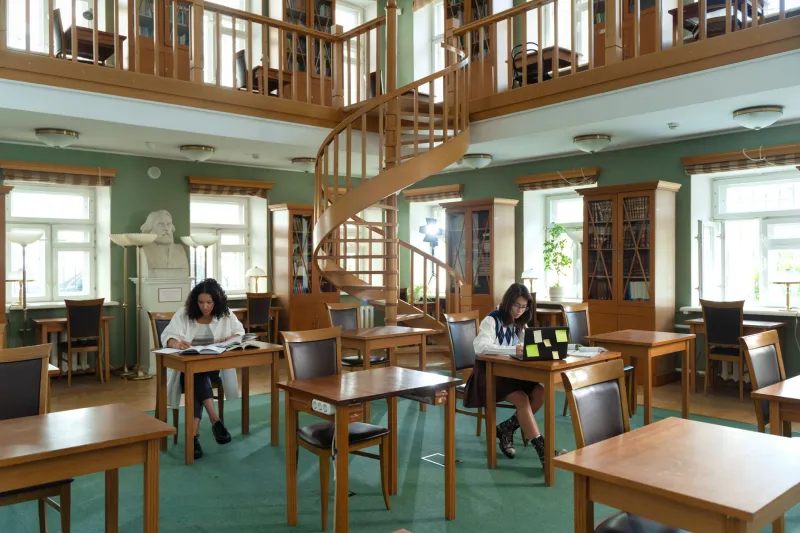
None of this is an argument against search engines, or against the genuine democratization of information that the internet has enabled. Access to knowledge is not the enemy of wonder. Libraries have always contained more answers than any individual could absorb, and the great curious minds of every era have been voracious consumers of existing knowledge. The difference is that libraries required effort, selection, and time — and those requirements were not merely inconveniences to be overcome. They were the conditions under which genuine thinking happened.
What we might recover, then, is not ignorance but patience with uncertainty. The deliberate practice of holding a question open before reaching for the phone. The classroom exercise of asking students to speculate before they search. The personal discipline of writing down a question in the morning and refusing to look it up until evening, allowing the mind to work on it in the interval. These are small gestures, but they are gestures toward a different relationship with not-knowing — one in which the gap between question and answer is understood as the space where thinking actually occurs.
Diderot's Encyclopédie was subtitled, in part, a Reasoned Dictionary of the Sciences, Arts, and Trades. The word reasoned is the one worth dwelling on. The project was not merely a repository of facts. It was an argument — about how facts connect, what they imply, where they lead, and what they fail to explain. That argument required readers who were willing to remain in motion, who understood that the end of one answer was the beginning of the next question.
We have built extraordinary tools for finding answers. We have built almost nothing for preserving the disposition that makes answers worth seeking. That imbalance is not a technical problem. It is a cultural one, and it will not be resolved by any algorithm currently in development.