The Diderot Review Reason, Inquiry, and the Life of the Mind

The Diderot Review

Reason, Inquiry, and the Life of the Mind

Latest Articles

Politics & Culture

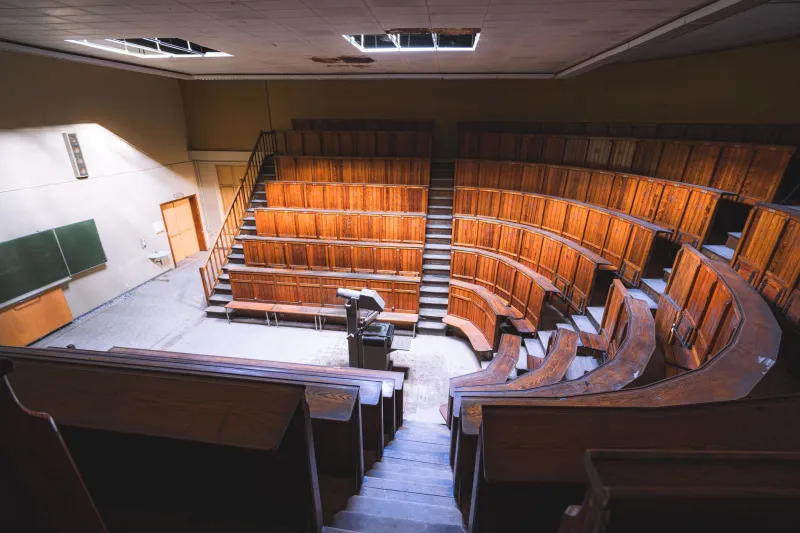
The Fortress of Knowledge: How Academic Specialization Built Walls Where It Promised Windows

The modern research university promised to liberate inquiry from the dogmatic insularity of medieval scholasticism. Instead, it has produced a new kind of intellectual confinement—one defined not by theological orthodoxy but by disciplinary boundary enforcement, professional gatekeeping, and the quiet penalization of scholars who read too widely. The irony would not have been lost on the men who invented the research university.

Silence as Discipline: Recovering the Lost Art of Doing Nothing
Technology & Society

Silence as Discipline: Recovering the Lost Art of Doing Nothing

In an era engineered for perpetual stimulation, the capacity to sit quietly with one's own thoughts has become not merely rare but culturally suspect. Neuroscience and philosophy alike suggest that this erosion of contemplative space carries consequences far graver than simple distraction. Reclaiming boredom may be among the most urgent intellectual and moral imperatives of our time.

Politics & Culture

The Return of the Expert: How Depth Is Displacing the Illusion of Easy Answers

After more than a decade in which populist skepticism eroded public confidence in specialized knowledge, something is shifting. Cultural and economic signals suggest that genuine mastery is regaining the authority it once commanded — but the conditions for that recovery are fragile, and worth examining carefully.

Technology & Society

The Café and the Cloud: On Why Ideas Still Need Rooms

The migration of intellectual life to digital platforms has been celebrated as liberation from geography, but something essential may have been lost in the translation. From the Parisian salon to the American research university, the history of ideas suggests that physical proximity — with all its friction and accident — has been indispensable to genuine intellectual progress.

Technology & Society

Drowning in Data: How Information Abundance Corrupts the Rational Mind

The Enlightenment philosophers who championed universal knowledge could not have anticipated a world in which the sheer volume of available information would become its own form of tyranny. Modern cognitive science reveals a troubling paradox: educated individuals, confronted with excessive data, frequently make worse decisions than those operating with less. What the 18th century understood about the architecture of reason may be precisely what the digital age has forgotten.

The Credentialed Mind and Its Discontents: On the Slow Disappearance of the Thinking Generalist
Politics & Culture

The Credentialed Mind and Its Discontents: On the Slow Disappearance of the Thinking Generalist

The transformation of knowledge into a professional enterprise—complete with licensing bodies, peer-reviewed gatekeeping, and institutional affiliation requirements—has produced extraordinary depth in narrow domains while quietly impoverishing the broader intellectual culture. The polymathic curiosity that animated Enlightenment thought was not a luxury of leisured aristocrats; it was a method, and its decline represents a genuine loss that no amount of interdisciplinary conference programming h

Politics & Culture

The Credibility Collapse: How America Learned to Distrust the People Who Know Things

Americans today enjoy access to more verified knowledge than any civilization in recorded history, yet distrust of credentialed experts has reached a generational peak. This paradox—abundant information alongside corrosive skepticism—poses a direct threat not only to public health and policy but to the democratic ideal that an informed citizenry is the foundation of self-governance. Understanding how we arrived here requires confronting uncomfortable truths about institutions, media, and the phi

Technology & Society

Prejudice by Proxy: The Hidden Moral Failures Encoded in Artificial Intelligence

Machine learning systems do not invent discrimination—they inherit it, distill it, and reproduce it at scale. From courtrooms to emergency rooms, algorithms trained on centuries of biased human decisions are quietly reshaping life outcomes for millions of Americans. The question is no longer whether these systems carry prejudice, but whether we possess the intellectual honesty to confront what they reveal about ourselves.